
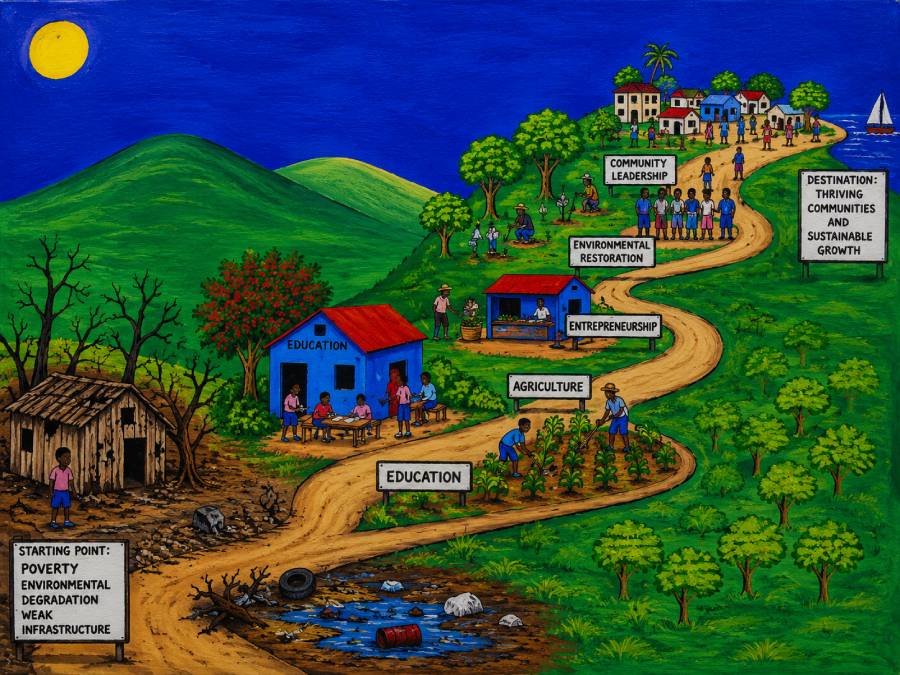
Overcoming Long-term Poverty in Haiti: A Roadmap for Sustainability with 5 Pillars
Across decades and generations, Haiti has faced cycles of crisis that deepen poverty and slow progress. Yet within this reality, Haitians consistently demonstrate resilience, ingenuity, and a desire for long-term change. Many solutions already exist in communities, institutions, and the Haitian diaspora. What Haiti needs is not a single “fix,” but a strategic roadmap that strengthens systems over time.
This article outlines a practical, hopeful, and forward-looking path toward sustainable development, one that centers Haitian leadership, local institutions, and long-term resilience.
The Short Answer
Haiti could reduce long-term poverty by strengthening five interconnected systems:
- Soil, water, and environmental regeneration
- Rural and urban economic diversification
- Local governance capacity and community institutions
- Human capital expansion through education and health
- Resilience-oriented infrastructure and risk management
In essence: poverty in Haiti can decline when economic opportunity grows from strong, resilient systems, not from short-term projects alone.
A Systems Roadmap for Haiti’s Long‑Term Development: 5 Interconnected Systems
Most development strategies fail when they approach Haiti as a series of isolated problems. The roadmap below instead focuses on systems, where progress in one area supports progress in others.
1. Regenerating Land, Soil, and Water Systems (The Foundation)
Sustainable development in Haiti begins with the land. Healthy soil and water systems are the basis for:
- Food security
- Livelihoods
- Disaster resilience
- Local economic activity
Key Pathways
a. Large-scale soil regeneration initiatives
- Terracing and contour planting
- Agroforestry combining fruit trees, nitrogen-fixing species, and crops
- Mulching and soil cover techniques to reduce erosion
b. Watershed-level management
- Reforestation in upper basins
- Community riverbank protection groups
- Small check-dams and flood management structures
c. Climate-resilient agriculture
- Drought-resistant crops
- Small-scale irrigation and water harvesting
- Farmer training networks
Why It Matters
Healthy land reduces poverty by increasing yields, strengthening rural incomes, and reducing disaster vulnerability. It is the first system that must be rebuilt for others to succeed.
2. Diversifying Haiti’s Economy Beyond Low-Income Survival
Poverty declines when more people access stable income sources. Haiti’s economy can diversify through multiple, complementary pathways.
Key Pathways
a. Rural economic diversification
- Strengthened cooperatives for crops, livestock, and agro-processing
- Local food value chains (storage, packaging, transportation, markets)
- Community-led microenterprise development
b. Urban and peri-urban opportunity hubs
- Small business incubation in trades, repair, construction, and digital work
- Access to credit, savings, and mobile financial services
- Training centers linked to real market demand
c. Diaspora-enabled economic investment
- Diaspora‑supported cooperatives
- Small-scale investment pools
- Skills transfer and remote collaboration
d. Expanding renewable energy access
- Solar microgrids
- Energy-as-a-service for schools, clinics, and small businesses
- Reduced reliance on costly generators
Why It Matters
Diversification reduces reliance on subsistence farms, unstable informal work, and food imports. It creates space for Haitians to build opportunity across regions and sectors.
3. Strengthening Local Governance and Community Institutions
Local institutions, not just national structures, shape daily life.
When communities and municipalities have basic resources and tools, they can:
- Maintain infrastructure
- Coordinate disaster response
- Improve service delivery
- Manage local development funds effectively
Key Pathways
a. Municipal capacity-building
- Training in budgeting, planning, and asset management
- Partnerships with local universities and civil society
- Transparent community planning forums
b. Community leadership networks
- Village committees
- Women’s organizations and youth groups
- Farmer and producer cooperatives
c. Participatory local development planning
- Shared priority setting
- Community scorecards for service performance
- Joint monitoring of local projects
Why It Matters
Many long-term development systems depend on local governance, roads, water points, markets, and land use. Strengthening these institutions makes progress more stable and less dependent on external cycles.
4. Expanding Human Capital Through Education and Health
Haiti’s greatest asset is its people. Improving education and health systems unlocks potential across all sectors.
Key Pathways
a. Improving education access and quality
- Training and certifying Haitian teachers
- School-based feeding linked to local agriculture
- Technology-assisted learning where feasible
b. Strengthening community health systems
- Expanding local clinics and mobile health services
- Training community health workers
- Improving maternal and child nutrition programs
c. Youth opportunity pipelines
- Technical education aligned with job markets
- Apprenticeships with local businesses
- Digital skills and remote work pathways
Why It Matters
Healthy, educated populations drive economic growth, institutional stability, and local problem‑solving. Human capital investments pay off across generations.
Donate to Haiti
Your gift will help address food security and economic development in Haiti. $100 can help give a Haitian family seeds for planting their own crops. $150 can provide a rooster and a hen for a family to begin breeding chickens.
5. Building Resilience Through Infrastructure and Risk Management
Weak infrastructure amplifies poverty. Sustainable development requires resilient, community-compatible infrastructure.
Key Pathways
a. Climate‑resilient rural infrastructure
- Small bridges and culverts
- Community-maintained feeder roads
- Irrigation channels and water storage
b. Urban resilience priorities
- Drainage systems
- Solid waste management
- Safe transport corridors
c. Risk reduction and preparedness
- Early warning systems
- Local disaster committees
- Evacuation plans
- Community drills and preparedness education
Why It Matters
Reducing disaster impact prevents families from falling back into poverty. Infrastructure stability supports economic activity, schooling, and healthcare delivery.
Joining Hands with The Haitian Development Network Foundation
HDN contributes to this roadmap by focusing on foundational systems that enable long-term development:
1. Soil and environmental regeneration
HDN emphasizes soil as critical infrastructure, essential for food security, water management, and disaster resilience.
2. Haitian-led knowledge and decision-making
HDN centers local leaders, professionals, and community groups in all strategy and program design.
3. Systems thinking
HDN promotes analysis that looks beyond symptoms to the interactions between land, economy, governance, and human capital.
4. Connecting partners and resources
HDN acts as a convener, supporting Haitian-led solutions while linking them with research, diaspora engagement, and development networks.
Through these approaches, HDN helps lay the groundwork for a long-term, Haitian-driven development path.
Ready to Support Haiti?
Haiti’s long-term poverty is not inevitable. It reflects systems that have been weakened over time, and systems can be rebuilt. The roadmap outlined here focuses on what is already possible: regenerating land, supporting local economies, strengthening institutions, investing in human capital, and building resilience.
None of these steps require waiting for a perfect moment. They require sustained commitment, Haitian leadership, and the understanding that development is a long process of building strong foundations.
With coordinated effort, consistent support, and respect for Haitian knowledge and institutions, Haiti can shift from surviving crisis to building durable, shared prosperity, one system at a time. Your contribution matters.
Donate to Haiti
Your gift will help address food security and economic development in Haiti. $100 can help give a Haitian family seeds for planting their own crops. $150 can provide a rooster and a hen for a family to begin breeding chickens.