
9 High‑Impact Local Entrepreneurship Opportunities That Can Strengthen Haiti’s Economy
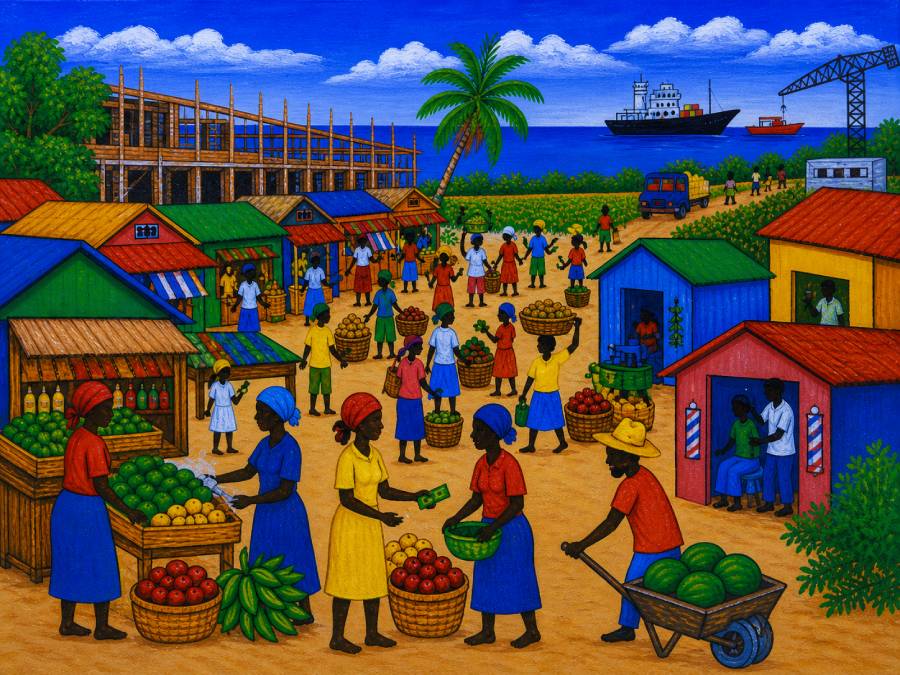
In Haiti, entrepreneurship is more than business—it is survival, innovation, and community leadership. From street vendors and metalworkers to farmers, carpenters, shop owners, and digital freelancers, entrepreneurship powers most of Haiti’s economic activity.
With the right support systems, local entrepreneurship could become one of Haiti’s strongest pathways out of poverty, generating jobs, stabilizing markets, and strengthening communities.
This article outlines how entrepreneurship fuels economic growth in Haiti—and identifies concrete opportunities where local businesses can thrive.
The Short Answer: Why This Matters
Local entrepreneurship strengthens Haiti’s economy by:
- Creating jobs faster than any other sector
- Circulating money locally rather than sending it abroad
- Expanding access to services and goods in underserved areas
- Reducing dependence on imports
- Helping communities withstand shocks and instability
- Stimulating innovation and problem‑solving at the local level
In Haiti, entrepreneurship is not the alternative to development—it is the engine of development.
Small Businesses Are Haiti’s Largest Employer
In Haiti, micro and small businesses employ far more people than the formal sector, government, or international organizations.
A strong entrepreneurial sector:
- Strengthens local purchasing power
- Keeps young people engaged
- Reduces migration pressure
- Stabilizes communities
Entrepreneurship isn’t the “last resort”—it is the backbone of Haiti’s economy.
What makes small businesses grow?
- Access to capital
- Skills training
- Stable demand
- Tools, equipment, and infrastructure
- Supportive local institutions
These are levers policymakers and NGOs can influence directly.
Local Entrepreneurship Keeps Money Circulating Inside Haiti
Import-heavy economies lose local wealth to foreign suppliers. Entrepreneurial ecosystems flip the script:
- Local businesses buy from each other
- Earnings are spent in local markets
- Value stays within communities
Even small enterprises—bakeries, welders, tailors, agro‑processors—create local economic loops where money circulates multiple times before leaving.
This builds stronger internal markets.
Entrepreneurs Solve Real Problems Quickly
Because local entrepreneurs live the realities of Haiti daily, they spot opportunities and design solutions faster than external actors.
Examples:
- Motorcycle mechanics adapting fuel systems
- Farmers testing drought-resistant crops
- Youth groups running digital freelance hubs
- Women’s cooperatives organizing microfinance circles
- Technicians building solar-powered phone‑charging kiosks
Entrepreneurs are Haiti’s real-time problem solvers, constantly responding to market needs.
Opportunity Areas: 9 Sectors Where Haitian Entrepreneurs Can Thrive
Below are nine realistic, high‑potential entrepreneurship sectors tailored specifically to Haiti’s current context.
1. Food Processing and Agro‑Transformation
Haiti imports over 60% of its food, but local crops could support a vibrant agro-processing sector:
- Cassava flour
- Breadfruit flour
- Peanut butter
- Dried mango and fruit chips
- Hot sauces and condiments
- Herbal teas and moringa powder
Processing adds value, increases shelf life, and creates rural jobs.
Why it works: It builds on existing agricultural skills and reduces import dependency.
2. Construction, Repair, and Skilled Trades
Haiti has chronic demand for:
- Masons
- Electricians
- Plumbers
- Welders
- Carpenters
- Roofers
- Solar installation technicians
These trades grow even during downturns because infrastructure and housing always need maintenance.
Why it works: Training + small equipment grants can scale these businesses rapidly.
3. Renewable Energy Micro‑Enterprises
Given the unreliable grid, solar entrepreneurship is booming:
- Solar panel installation
- Battery repair
- Inverter maintenance
- Solar-powered kiosks
- Community microgrids
Why it works: Households and businesses urgently need energy autonomy.
4. Digital Services and Remote Work Hubs
Youth in Haiti have enormous potential in:
- Graphic design
- Social media management
- Customer support
- Transcription
- Micro-tasking platforms
- Software QA testing
Local hubs offering laptops, internet, and training can turn unemployed youth into digital earners.
Why it works: Digital skills bypass local infrastructure constraints.
Donate to Haiti
Your gift will help address food security and economic development in Haiti. $100 can help give a Haitian family seeds for planting their own crops. $150 can provide a rooster and a hen for a family to begin breeding chickens.
5. Small Transport and Logistics Businesses
Haiti’s mobility relies heavily on small private operators:
- Motorcycle taxis
- Small delivery services
- Market transport
- Agricultural collection and distribution
Why it works: Transport is essential for markets, goods, and services—entrepreneurs fill the gaps.
6. Waste Collection and Recycling Micro‑Enterprises
Waste is a challenge—but also a business opportunity:
- Plastic recycling
- Composting
- Waste collection cooperatives
- Upcycled products (bags, crafts, bricks)
Why it works: It creates urban jobs while improving environmental conditions.
7. Water, Sanitation, and Hygiene (WASH) Enterprises
Local entrepreneurs can run:
- Community water kiosks
- Water delivery services
- Latrine construction
- Hygiene product businesses
Why it works: These services are essential—and prosperous—when done safely.
8. Textiles, Tailoring, and Small-Scale Manufacturing
Demand is constant for:
- School uniforms
- Workwear
- Bags and backpacks
- Repairs
- Local artisan products
Why it works: These sectors require small startup capital and grow through word of mouth.
9. Community-Based Tourism (Where Security Allows)
Future opportunity areas include:
- Guesthouses
- Cultural tours
- Eco‑tourism
- Local art and craft markets
Even now, communities near safe zones can prepare capacities for eventual tourism growth.
What Entrepreneurs Need Most: A Practical Support Framework
Entrepreneurship thrives when basic enablers are in place.
The Haiti Entrepreneurship Support Framework:
| Enabler | Why It Matters | What It Looks Like |
| Access to capital | Haitian entrepreneurs lack funding | Microloans, savings groups, diaspora-backed funds |
| Skills development | Many have talent but lack business skills | Vocational training, digital skills academies |
| Market access | Entrepreneurs need customers | Cooperatives, procurement networks, marketplaces |
| Tools & equipment | Small capital investments have big effects | Tool banks, equipment grants, rental programs |
| Mentorship & networks | Entrepreneurs learn best from peers | Business circles, diaspora mentors, incubators |
| Basic infrastructure | Roads, water, energy matter | Solar microgrids, feeder road repairs |
| Policy support | Predictability builds confidence | Simple licensing, fair taxes, business protections |
Haiti does not need massive capital for entrepreneurship—it needs targeted support systems that unlock the potential Haitians already have.
How Local Entrepreneurship Drives Inclusive Economic Growth
Entrepreneurship supports wider economic systems in Haiti by:
- Creating stable micro-markets: Vendors, artisans, and service providers multiply economic activity in clusters.
- Reducing dependency: Locally produced goods replace expensive imports.
- Generating household income: Families invest in education, nutrition, and housing.
- Strengthening community networks: Cooperatives and savings groups improve resilience.
- Supporting agriculture and environment: Local entrepreneurs adopt practices that protect land and generate profit.
- Building functional local economies: Community-level economic activity stabilizes regions even amid national volatility. Entrepreneurship is the connective tissue between Haiti’s social, environmental, and economic systems.
Joining Hands with The Haitian Development Network Foundation
The Haitian Development Network Foundation (HDN) supports entrepreneurship as a pillar of long-term development in Haiti.
HDN contributes by:
- Highlighting rural and urban opportunity sectors: Helping practitioners identify sectors where small businesses can thrive.
- Lifting up Haitian-led business success stories: Celebrating entrepreneurs who innovate, adapt, and create community value.
- Promoting systems thinking: Showing how entrepreneurship connects with land, governance, infrastructure, and education.
- Supporting local leadership: Encouraging partnerships that strengthen Haitian cooperatives, associations, and youth groups.
Entrepreneurship is a powerful pathway toward Haitian-led development—and HDN works to amplify it across sectors.
On a Concluding Note
Haiti’s economic future will not be built only by large institutions or external actors. It will be built by:
- Market vendors
- Small manufacturers
- Skilled tradespeople
- Digital creators
- Farmers and cooperatives
- Youth entrepreneurs
- Local service providers
These are the people who keep Haiti’s economy moving every day.
With strategic support—capital, training, networks, infrastructure, and enabling policies—local entrepreneurs can drive the kind of growth that is inclusive, resilient, and rooted in Haitian communities.
Entrepreneurship is not just an economic strategy for Haiti.
It is a path toward dignity, stability, and long-term prosperity.
Donate to Haiti
Your gift will help address food security and economic development in Haiti. $100 can help give a Haitian family seeds for planting their own crops. $150 can provide a rooster and a hen for a family to begin breeding chickens.