
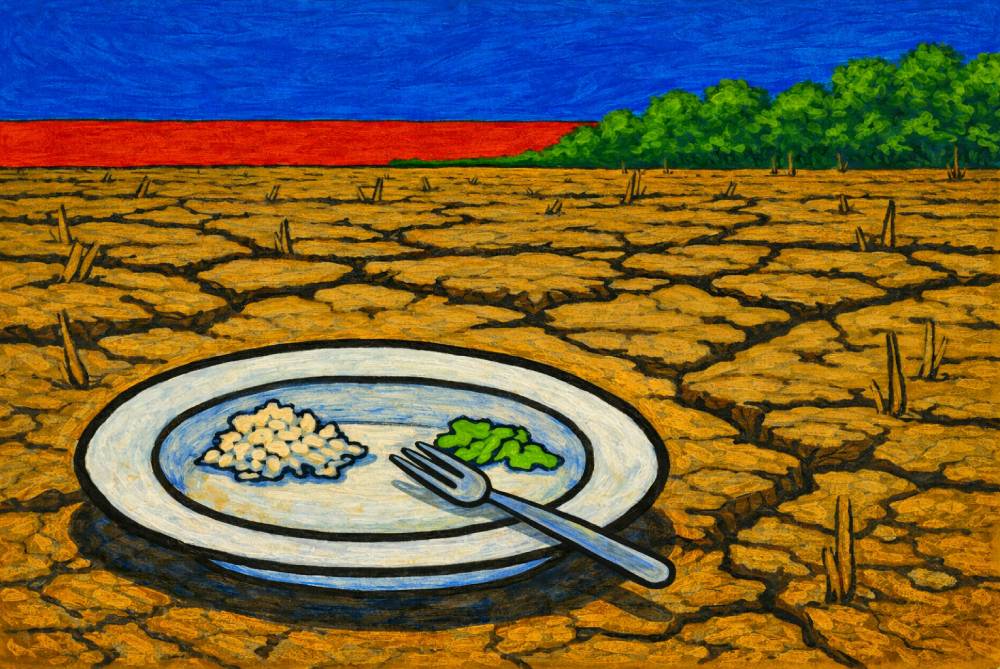
Understanding Food Insecurity in Haiti: 9 Key Drivers and Daily Realities
When Haiti appears in international headlines, food insecurity is often part of the story—rising prices, shortages, or emergencies triggered by storms and political crises. For many families inside the country, however, food insecurity is not a rare event. It is a recurring condition that shapes daily decisions about work, schooling, and health.
Understanding why food insecurity is so persistent in Haiti requires looking beyond a single cause. It is not only about “lack of food,” nor only about “poverty.” It emerges from how agriculture, markets, infrastructure, governance, climate, and social systems interact over time.
This pillar guide presents nine key drivers of food insecurity in Haiti and connects them to the everyday realities faced by households across rural and urban areas.
The Short Answer
- Food insecurity in Haiti is driven by low and unstable agricultural production, fragile soils, and high exposure to climate and disaster shocks.
- Markets and infrastructure often function in ways that make food expensive, especially for poor households and remote communities.
- Political instability, weak institutions, and limited public finance constrain the state’s capacity to support production, regulate markets, and provide safety nets.
- Global factors—such as world food prices and trade patterns—interact with domestic conditions to shape availability and affordability.
- These drivers reinforce one another, producing cycles in which shocks lead to short-term responses but rarely to structural changes.
In short, food insecurity in Haiti is the outcome of a system in which fragile agricultural foundations, constrained incomes, volatile markets, and repeated shocks combine to make access to sufficient, nutritious food uncertain for many households.
1. Fragile Soils and Low Agricultural Productivity
A foundational driver of food insecurity is the condition of Haiti’s soils and farming systems.
Degraded land and limited yields
Many farmers work on:
- Thin, erosion‑prone soils, especially on hillsides.
- Small, fragmented plots with limited irrigation.
- Land that has been cultivated continuously without sufficient restoration.
This leads to:
- Low average yields for staple crops and vegetables.
- High variability in production from season to season.
- Limited surplus for sale after meeting immediate household needs.
Daily realities
For rural households:
- Harvests often do not last until the next planting season, forcing purchases at times when incomes are lowest.
- The margin between a “good year” and a “bad year” is narrow, making planning difficult.
For the national food system:
- Domestic production struggles to meet demand, contributing to reliance on imports for many staple foods.
2. Climate Shocks, Disasters, and Seasonal Stress
Haiti is highly exposed to hurricanes, storms, and periods of drought. These events interact with fragile land to amplify food insecurity.
Recurrent shocks
- Heavy rains and storms can destroy crops, livestock, and stored food.
- Droughts reduce yields and can lead to total crop failure in rainfed systems.
- Soil erosion during storms reduces future productivity.
Seasonal hunger
Even in years without major disasters, many communities experience:
- Periods between harvests when food stores run low.
- Higher prices in local markets during lean seasons.
This creates a pattern:
Degraded land and fragile agriculture (A)
→ heighten sensitivity to climate and disaster shocks (B)
→ leading to harvest losses and higher prices (C)
→ forcing households to reduce food intake or sell assets (D)
→ which further weakens their capacity to recover and invest (A), and the cycle repeats.
3. Poverty, Limited Incomes, and Unequal Purchasing Power
Food insecurity is not only a production issue; it is also an income issue. Even when food is available in markets, many households cannot afford sufficient nutritious food.
Low and unstable incomes
- A large share of the workforce is in informal, low‑wage jobs or smallholder farming.
- Daily or seasonal income patterns mean that cash flow is irregular.
- Shocks (illness, price spikes, disasters) can quickly reduce purchasing power.
Everyday trade‑offs
Households often face decisions such as:
- Paying for school fees or health care vs. buying more diverse or higher‑quality food.
- Reducing portion sizes or meal frequency to stretch limited cash.
- Taking on debt or selling productive assets (tools, livestock) to meet immediate food needs.
The result is a situation where food may be physically present in markets, but not economically accessible to many families, especially in urban informal settlements and rural areas after bad harvests.
4. Markets, Prices, and the Cost of Getting Food to People
Food markets connect producers, traders, and consumers—but the way they function can either help or hinder food security.
High transaction and transport costs
- Poor road conditions and long distances raise the cost of moving food from rural areas to cities and between regions.
- Perishable products may spoil before reaching markets, discouraging production and reducing supply.
- Localized disruptions (blocked roads, fuel shortages) can rapidly cause price spikes.
Price volatility
- Domestic production variability, combined with exposure to global price changes, causes significant fluctuations in the prices of staples.
- When prices rise quickly, households with limited savings have few options besides reducing consumption.
Daily realities
For consumers:
- Prices for staples like rice, maize, or cooking oil can change frequently, making budgeting difficult.
- Small shops and street vendors may need to pass on cost increases immediately, as they operate with minimal buffers.
For producers:
- In some seasons, farm‑gate prices are low, while consumer prices remain high due to intermediary costs and transport margins.
This structure means that markets do not always translate national food availability into stable and affordable access at the household level.
Donate to Haiti
Your gift will help address food security and economic development in Haiti. $100 can help give a Haitian family seeds for planting their own crops. $150 can provide a rooster and a hen for a family to begin breeding chickens.
5. Urbanization, Housing Conditions, and Changing Diets
Food insecurity in Haiti is increasingly urban as well as rural.
Urban growth and constraints
- Many migrants from rural areas settle in informal urban neighborhoods with limited services and high living costs.
- Housing conditions often make home food production difficult (little space for gardens or livestock).
- Dependence on purchased foods is high, making households sensitive to price shocks.
Dietary changes
- Urban diets may include more imported staples and processed foods, while fresh fruits and vegetables can be more expensive or less accessible.
- Time constraints and lack of storage encourage small, frequent purchases, often at higher unit prices.
Daily realities include:
- Households adjusting portion sizes or food quality when cash is short.
- Increased consumption of less nutritious, energy‑dense foods when they are cheaper than diverse, fresh foods.
This dynamic shows how food insecurity is not only about “having food” but also about what kind of food is affordable and available in specific settings.
6. Public Institutions, Safety Nets, and Policy Constraints
The ability of the state and public institutions to mitigate food insecurity is shaped by fiscal and institutional realities.
Limited fiscal space and capacity
- A narrow tax base and competing demands constrain public budgets.
- Food and agriculture ministries often operate with limited resources for extension, market regulation, or strategic reserves.
- Social protection systems may not reach all vulnerable households or may be short‑term and project‑based.
Policy and coordination challenges
- Coordination between agriculture, trade, social protection, and disaster management policies can be uneven.
- Data systems for monitoring food security, markets, and nutrition may be incomplete or fragmented.
For households, this means:
- Formal safety nets—cash transfers, school feeding, or targeted subsidies—are often episodic or limited in coverage.
- Responses to food crises may rely heavily on international assistance, which can be substantial but may not always be aligned with long‑term systems strengthening.
The result is a system where structural drivers of food insecurity persist, and public responses are frequently reactive rather than preventive.
7. International Trade, Imports, and Global Price Exposure
Haiti is integrated into global food markets through imports of staples such as rice, wheat flour, and cooking oil.
Benefits and risks
- Imports can fill gaps when domestic production is insufficient.
- They can help stabilize supply after disasters or poor harvests.
However:
- Fluctuations in global prices or shipping costs are transmitted to local markets, affecting affordability.
- Heavy reliance on certain imported staples can weaken incentives to invest in diversified local production.
In practice:
- Periods of global price spikes (for example, in cereals or fuel) can translate into rapid increases in local food prices, even if local harvests were relatively stable.
- Policy choices on tariffs, subsidies, or food aid can shape the balance between supporting consumers and supporting local producers.
This adds another layer to Haiti’s food insecurity: external shocks in global markets interact with domestic vulnerabilities, sometimes in ways that are hard to predict.
8. Social Networks, Remittances, and Coping Strategies
Formal systems are only part of the picture. Many households rely on social mechanisms to manage food gaps.
Social support and remittances
- Families often share food and resources within extended networks, especially in rural communities.
- Remittances from diaspora members can provide crucial support for food purchases and other expenses.
Coping strategies
When stress increases, households may:
- Reduce meal frequency or dietary quality.
- Sell assets (livestock, tools, household items) to buy food.
- Take on debt from local lenders or shops.
- Withdraw children from school to save costs or to contribute income.
These strategies help households navigate short‑term crises, but over time can:
- Reduce their ability to recover and invest (e.g., after selling productive assets).
- Limit future opportunities, particularly for children whose education is disrupted.
Food insecurity therefore alters not only current consumption, but future prospects.
9. Nutrition, Health, and Long‑Term Human Capital
Food insecurity has direct consequences for nutrition and health, which in turn affect economic and social outcomes.
Nutrition and health impacts
- Inadequate and unbalanced diets can lead to stunting, micronutrient deficiencies, and other forms of malnutrition, particularly among children and pregnant women.
- Periodic food shortages combined with infections can weaken immune systems and increase health risks.
- High reliance on low‑cost, energy‑dense but nutrient‑poor foods can contribute to forms of malnutrition that include both undernutrition and overweight in different family members.
Long-term implications
These conditions affect:
- School performance and learning outcomes, influencing future earning potential.
- Labor productivity, as health problems reduce adults’ ability to work effectively.
- Healthcare costs, which can further strain household budgets.
In this way, food insecurity and poor nutrition can create a long‑term cycle:
Inadequate food access (A)
→ leads to malnutrition and health problems (B)
→ reducing learning and productivity (C)
→ limiting income and resilience (D)
→ which reinforces inadequate food access (A).
This long‑term dimension shows why addressing food insecurity is central to broader development goals.
Joining Hands with The Haitian Development Network Foundation
The Haitian Development Network Foundation (HDN) approaches food insecurity in Haiti as a systems issue that spans agriculture, soil health, markets, governance, and social structures.
This perspective translates into several areas of focus:
- Soil regeneration and productive landscapes: HDN emphasizes improving the environmental foundations of food production—through soil regeneration, erosion control, and sustainable farming practices—so that rural communities can gradually increase and stabilize their own production.
- Linking livelihoods and food systems: Recognizing that food security depends on income as well as production, HDN supports approaches that strengthen rural and urban livelihoods, aiming to increase households’ capacity to purchase diverse and nutritious foods.
- Supporting data, analysis, and local decision‑making: HDN values efforts to improve understanding of food security patterns at local and national levels—who is affected, where, and why—so that responses can be better targeted and integrated with other development initiatives.
- Partnering with Haitian organizations and communities: The Foundation works alongside Haitian institutions, community groups, and professionals who are already engaged in agriculture, nutrition, and social support. HDN’s role is to complement local leadership with systems thinking, networks, and longer‑term perspectives.
By joining hands in this way, the Haitian Development Network Foundation aims to contribute to gradual shifts in the underlying systems that sustain food insecurity, rather than focusing only on short‑term relief.
On a Concluding Note
Food insecurity in Haiti is often visible through statistics or emergency reports, but its roots extend into the structure of land use, agriculture, markets, governance, and social networks. The nine drivers outlined here show how fragile soils, climate shocks, low incomes, market constraints, institutional limitations, and health outcomes are interconnected.
Seeing these drivers as parts of a system helps explain why food insecurity remains persistent, even when individual projects or short‑term interventions are in place. It also clarifies where sustained efforts can make a difference: strengthening agricultural foundations, improving market and infrastructure performance, expanding effective safety nets, and supporting households’ own strategies for resilience.
Addressing food insecurity in Haiti is therefore not a single program or policy, but a long‑term process of adjusting how core systems work, so that access to sufficient, safe, and nutritious food becomes more stable for households across the country.
Donate to Haiti
Your gift will help address food security and economic development in Haiti. $100 can help give a Haitian family seeds for planting their own crops. $150 can provide a rooster and a hen for a family to begin breeding chickens.